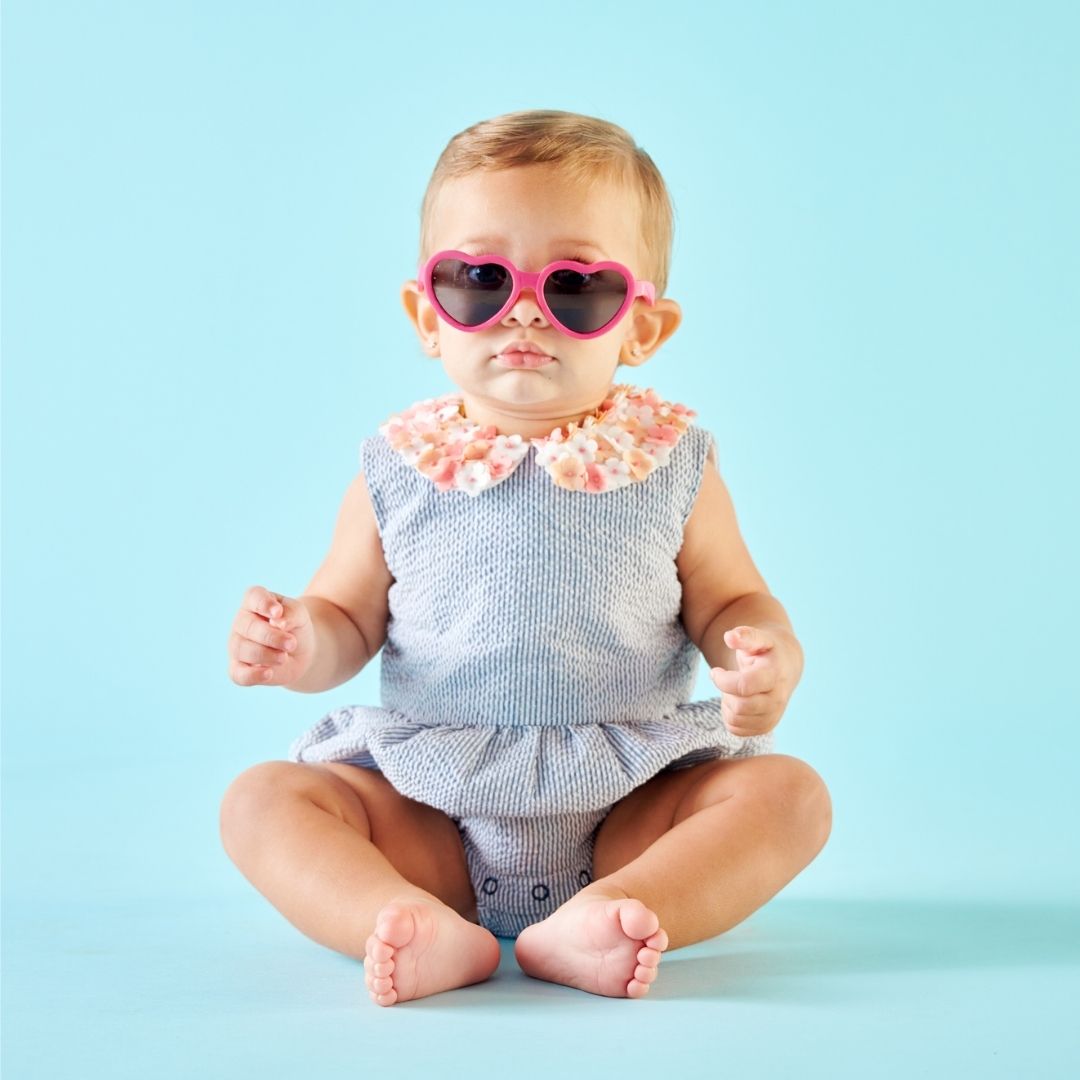
Why Sunglasses Are Important for Children
Choosing sunglasses for kids isn’t just about style — it’s about protecting developing eyes from harmful ultraviolet (UV) rays. Children’s eyes can be more vulnerable to UV exposure than adult eyes, which makes proper eye protection essential from an early age.
High-quality kids sunglasses help block harmful UV rays, reduce brightness and discomfort, and support healthy visual development. Sunglasses should be considered everyday sun protection, just like sunscreen or hats.
What Does UV400 Protection Mean?
UV400 lenses block 100% of UVA and UVB rays up to 400 nanometers, covering the full UV spectrum. When shopping for kids sunglasses, always look for 100% UV400 protection.
Dark lenses alone do not equal UV protection. A tinted lens without proper UV blocking can actually be worse because it may cause the pupil to dilate, allowing more harmful rays in.
Polarized vs. Non-Polarized Lenses: What’s the Difference?
Polarized Lenses
Polarized lenses include a special filter that reduces glare caused by sunlight reflecting off flat surfaces like water, snow, sand, and pavement.
- Reduces glare
- Improves comfort in bright light
- Can increase clarity in high-glare settings
Best for: beach days, boating, skiing, and other high-glare activities.
Non-Polarized Lenses
Non-polarized lenses reduce overall brightness and can provide full UV protection (when rated UV400), but they do not specifically filter glare.
- Excellent everyday sun protection
- More natural light perception
- Often more screen-friendly
Best for: playground time, school, travel, and daily outdoor wear.
Are Non-Polarized Lenses Better for Babies and Toddlers?
For very young children, non-polarized UV400 lenses are often the most practical choice — not because they’re safer, but because they can offer a more natural visual experience for developing eyes.
Babies and toddlers are still building depth perception and visual processing. Non-polarized lenses preserve natural light reflections, which many children find more comfortable. They can also be a better fit around screens and digital learning toys, which may appear dark or distorted through polarized lenses.
Polarized lenses are perfectly safe for young children, but they’re usually unnecessary for everyday early-childhood activities like stroller walks, outdoor play, and playground time.
Older kids in bright, glare-heavy environments → Polarized can be a helpful upgrade
Fit and Coverage Matter
Well-fitting sunglasses increase protection and make kids more likely to wear them. Look for lenses that cover the eye area, lightweight flexible frames, and a secure, comfortable fit.
When Should Kids Wear Sunglasses?
- On sunny days
- During outdoor play
- At the beach or park
- In winter (snow reflects UV rays)
- On cloudy days (UV still passes through clouds)
Kids Sunglasses Safety Checklist
- ✓ 100% UV400 protection
- ✓ Impact-resistant lenses
- ✓ Comfortable, secure fit
- ✓ Age-appropriate sizing
- ✓ Non-polarized lenses for babies and toddlers
- ✓ Optional: polarized lenses for high-glare environments


